What’s allowed and what isn’t
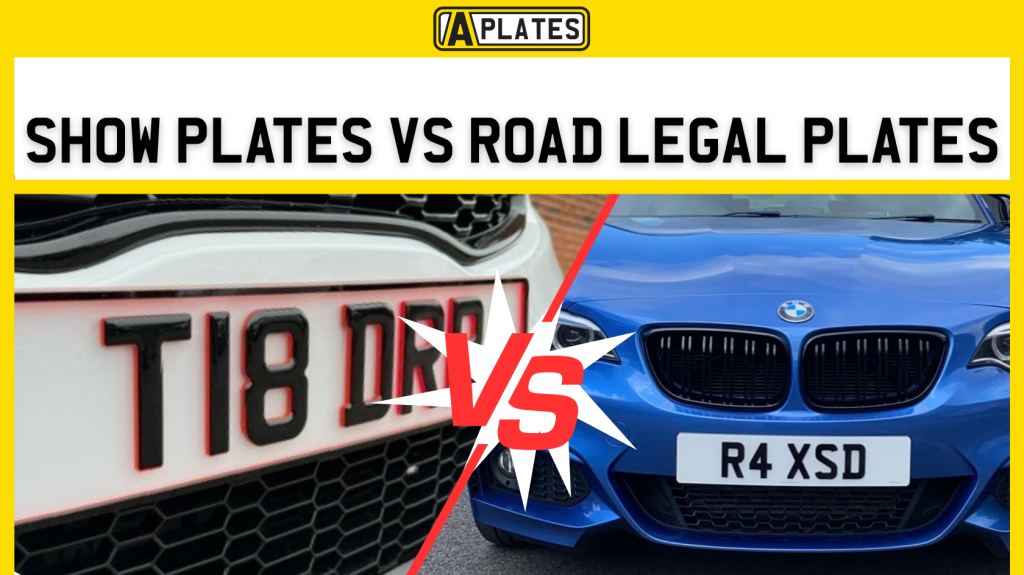
Show plates are popular for events, garages and photoshoots but they are not legal for road-use. Here’s the difference between show plates and road legal plates. The following is in context for the UK only:
What Are Show Plates?
Show plates allow for:
- Custom fonts. They aren’t restricted to Charles Wright font.
- Unique colours for characters and plates.
- Tinted backgrounds.
- Novelty spacing.
- Decorative badges.
- Custom text/markings. Not allowed to have supplier or British Standard markings if the plate is not road legal
They’re designed for display only, if driven to a location or event, the vehicle needs to have and display the road legal number plates. These may then be swapped out for the show plates on site.
What Makes a Number Plate Road Legal?
Legal plates must follow DVLA rules:
- Exclusively Charles Wright font.
- Standardised spacing.
- White front plate, yellow rear plate.
- No tint allowed.
- British Standard AU 145e compliant and marked.
- Marked with supplier name and postcode.
Why Show Plates Are Illegal on Roads
They are at least one of the following:
- Reduce visibility.
- Confuse ANPR cameras.
- Break DVLA spacing rules.
- Fail MOT tests.
When Show Plates Are Fine
- At Car shows.
- On Private land.
- In Garages.
- For Photography.
- For Events.
Show plates are certainly fun and add a distinct style to your vehicle but they’re not for the road. Always switch back to legal plates before driving.